
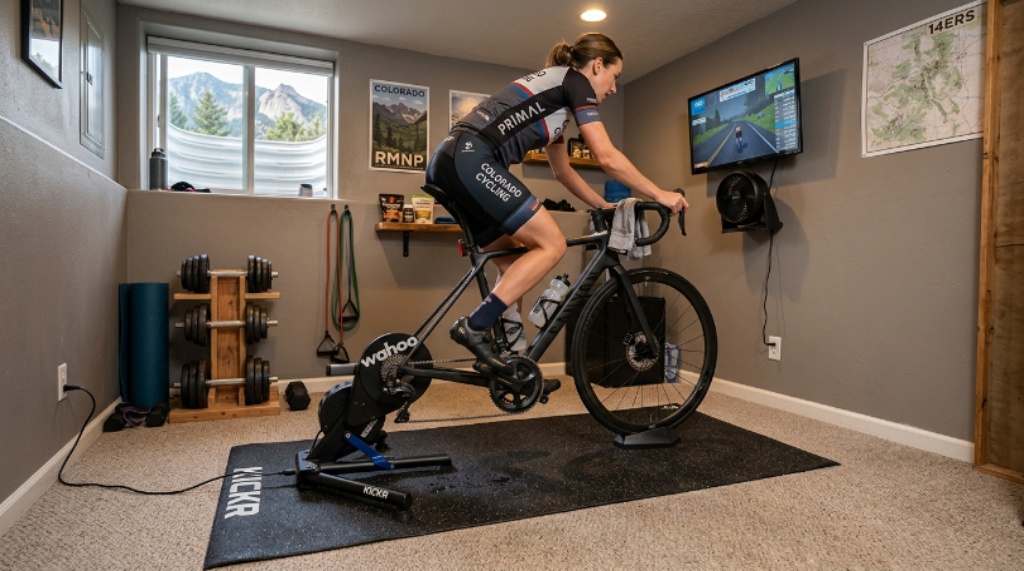
Setting up a home gym in Colorado is a smart move. The state’s unpredictable weather means even the most dedicated cyclists find themselves riding indoors for weeks at a time. Snow in April, icy roads in November, and afternoon thunderstorms in summer all push riders off the road and onto their trainers.
However, many Colorado cyclists overlook one critical piece of their indoor setup: the mat beneath their bike. A good trainer mat is not just an accessory. It protects your floors, reduces noise, absorbs vibration, and keeps your equipment stable during hard efforts. For small home gyms, where every inch of space counts, choosing the right mat makes a genuine difference.
This guide covers everything you need to know to find the best bike trainer mat for your Colorado home gym.
Why Colorado Riders Need a Trainer Mat More Than Most
Colorado homes face a unique set of conditions that make a trainer mat especially important. Temperature swings are extreme here. Basements and garages, which are popular home gym spaces in Colorado, can drop below freezing in winter and climb uncomfortably high in summer. These swings affect flooring materials in ways that matter for your equipment.
Hardwood floors, which are common in Colorado homes, are particularly vulnerable. The moisture from sweat drips onto the floor during every session. Over time, that repeated moisture exposure warps wood, stains finishes, and causes permanent damage. An exercise bike floor protector creates a barrier between your trainer and the floor, preventing that damage from the very first ride.
Concrete floors in garages and basements present a different issue. They are hard, cold, and unforgiving. Without a mat, trainers slide slightly under load, which feels unstable and can scratch the concrete surface over time. A quality mat grips both the floor and the trainer feet, keeping everything locked in place regardless of the intensity of your session.
Additionally, noise transmission is a real concern in Colorado’s multi-level homes and townhomes. The mechanical hum of a trainer, combined with the vibration it sends through the floor, travels easily through structures. A dense mat absorbs much of that vibration before it reaches the floor, reducing the sound that travels to rooms below.
What to Look for in a Bike Trainer Mat
Not all mats are created equal. Shopping for one without knowing the key features leads to poor choices that cost more in the long run. Here is what to prioritize.
Thickness and Density
Thickness directly affects vibration absorption and floor protection. For most home gym setups, a mat between 5 and 8 millimetres thick provides a good balance of protection and stability. Thinner mats save money but transmit more vibration. Thicker mats absorb more but can feel slightly unstable under a stationary trainer if the foam is too soft.
Density matters just as much as thickness. A dense mat resists compression under the weight of your bike and trainer. A soft, low-density mat compresses quickly and loses its protective properties within months of regular use. Look for mats made from high-density EVA foam or recycled rubber, as both materials hold their shape well over time.
Size and Shape
Most bike trainer mats come in a rectangular shape sized to fit a standard trainer footprint. A mat measuring roughly 90 by 180 centimetres fits most setups comfortably. However, for small home gyms, it is worth measuring your available floor space before purchasing. A mat that is too large leaves no room to stand beside your bike when mounting or dismounting.
Some mats are designed specifically for smart trainers or rollers and come in wider formats to accommodate the different stance width of those setups. If you use a direct drive trainer, check the manufacturer’s recommended mat dimensions before buying.
Surface Texture and Grip
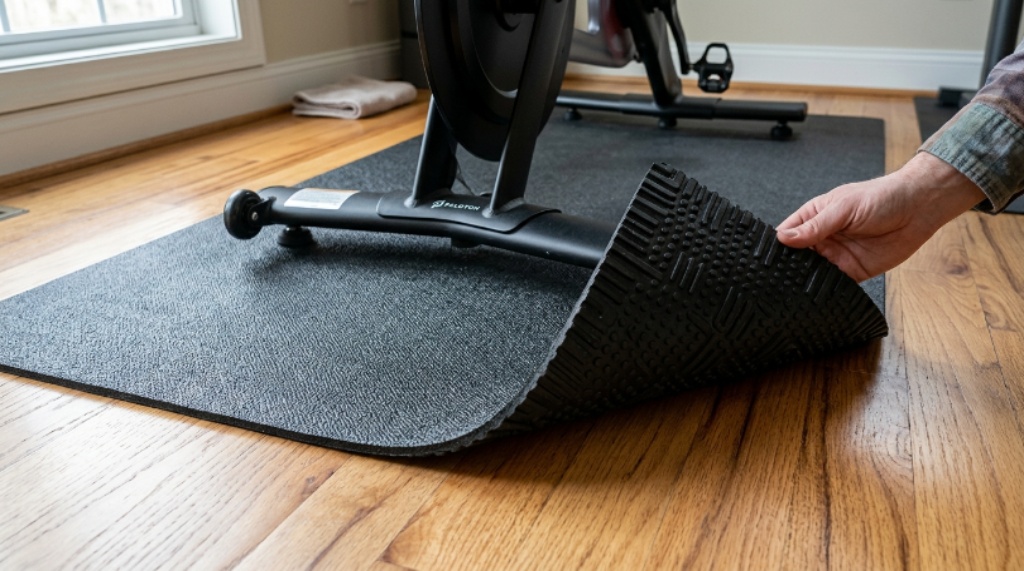
The top surface of the mat should be textured to prevent your shoes from slipping when you step on and off the bike. The underside should be grippy enough to stay in place on both hardwood and concrete floors. A smooth-bottomed mat will slide on polished surfaces, which defeats much of its purpose.
Rubberized undersides provide the best grip. EVA foam undersides work well on carpet but can shift on slick hardwood floors. If you are setting up on a smooth surface, prioritize mats with a rubber or rubberized coating on the bottom.
Sweat Resistance and Easy Cleaning
Indoor cycling generates a significant amount of sweat. That sweat falls on the mat, the trainer, and the bike. A mat that absorbs moisture rather than repelling it becomes a breeding ground for bacteria and develops odors quickly.
Look for mats with a closed-cell surface. Closed-cell foam does not absorb liquids. Sweat beads on the surface and can be wiped away with a damp cloth after every session. Open-cell foam, by contrast, soaks up moisture and is very difficult to clean thoroughly. This is one feature worth paying extra for, especially in a small gym where odors are more noticeable.
The Best Mat Types for Colorado’s Climate and Home Styles
Colorado’s range of home styles and climates means one mat type does not suit everyone. Here is a breakdown of the most common options and where each works best.
High-Density EVA Foam Mats
EVA foam mats are lightweight, affordable, and easy to roll up and store. They work well in finished basements and spare bedrooms with hardwood or laminate floors. Their smooth, closed-cell surface repels sweat and cleans quickly. Additionally, EVA foam provides good cushioning underfoot when you step off the bike.
The main limitation is longevity. EVA foam compresses more than rubber over time, especially under the concentrated weight of trainer feet. For casual riders doing two or three sessions per week, EVA foam holds up well for one to two years. For daily riders, rubber lasts significantly longer.
Recycled Rubber Mats
Rubber mats are the most durable option available. They resist compression, grip floors exceptionally well, and last for many years without losing their protective properties. They are heavier than foam and more expensive, but for serious cyclists who train frequently, the investment is justified.
Rubber mats work particularly well on concrete garage and basement floors. Their density absorbs trainer vibration better than foam, which makes a noticeable difference for riders in multi-level homes. The surface texture of rubber also provides confident footing when clipping in and out of your pedals.
Interlocking Foam Tiles
For small home gyms where the bike trainer is just one piece of a larger setup, interlocking foam tiles offer the most flexibility. They can be arranged to cover exactly the area you need, expanded when your gym grows, and reconfigured if you rearrange your space.
Interlocking tiles used as fitness room flooring protect the underlying surface just as well as a single mat. They also provide a cushioned surface for stretching, strength work, or yoga around the bike. Therefore, for multipurpose small gyms, this format delivers the best overall value.
Setting Up Your Trainer Mat in a Small Home Gym
Space is often the biggest constraint in a Colorado home gym. Many riders set up in a corner of a basement, a section of a garage, or a converted spare bedroom. Here are some practical tips for making the most of a compact setup.
Measure your space before purchasing. Note the dimensions of your trainer, the clearance you need to mount the bike, and any obstacles like water heaters, support columns, or storage shelves. A mat that is too large can block doorways or leave you cramped.
Position your trainer on the mat so the heaviest points, usually the rear axle and the trainer body, sit near the center of the mat. This distributes weight more evenly and prevents the mat from curling at the edges over time.
Leave the mat flat for at least 24 hours before your first ride if it arrives rolled. Rolled mats have a tendency to curl at the edges. Unrolling them and laying them flat with weights at the corners speeds up the flattening process considerably.
Keep a small microfiber towel on the mat beside your bike during sessions. Wiping up sweat as it falls prevents buildup and keeps the surface clean with minimal effort. This simple habit dramatically extends the life of any mat and keeps your gym smelling fresh.
What Colorado Cyclists Are Saying About Their Setup
Local cyclists across Colorado’s Front Range consistently identify two priorities when it comes to their indoor setup: floor protection and noise reduction. In Denver’s older homes with original hardwood floors, protecting those surfaces is non-negotiable. Riders in multi-unit buildings along the I-25 corridor emphasize vibration absorption for keeping peace with downstairs neighbors.
Riders training in garage gyms in towns like Fort Collins, Boulder, and Colorado Springs frequently deal with cold concrete floors and the need to keep their training area flexible for other uses. For these cyclists, cycling accessories like interlocking rubber tiles give the most versatility without permanently altering the space.
The consistent feedback is that investing in a quality mat from the start saves money compared to repairing damaged floors or replacing a cheap mat that compressed within a few months.
Conclusion
A bike trainer mat is one of the most practical investments a Colorado home cyclist can make. It protects hardwood and concrete floors from sweat damage and scratches. It reduces vibration and noise transmission to other parts of the home. It keeps your trainer stable during hard efforts and provides a safer surface for mounting and dismounting.
The right choice depends on your floor type, training frequency, and available space. High-density EVA foam works well for casual riders in finished basements. Recycled rubber provides superior durability for daily training and garage setups. Interlocking tiles offer flexibility for multipurpose small gyms.
Whether you choose a single mat or interlocking fitness room flooring, the key is to prioritize density, sweat resistance, and grip. These three qualities separate a mat that lasts years from one that fails within months. With the right exercise bike floor protector beneath your trainer, your home gym is set up to support your best riding through every Colorado winter and beyond.
Frequently Asked Questions
Do I really need a mat under my bike trainer, or is it just optional?
A mat is highly recommended for any indoor training setup. It protects your floors from sweat and scratches, prevents your trainer from shifting during hard efforts, and reduces vibration and noise. On hardwood floors especially, skipping a mat leads to costly floor damage over time.
What thickness of mat is best for a concrete garage floor in Colorado?
For concrete floors, a mat of at least 6 millimetres made from high-density rubber is ideal. Rubber grips concrete well, resists compression under the trainer’s weight, and provides adequate vibration absorption. Thinner foam mats work but compress faster on hard surfaces.
How do I clean and maintain a bike trainer mat?
Wipe the surface with a damp cloth after every session to remove sweat. For a deeper clean, use a mild soap solution and rinse thoroughly. Allow the mat to dry completely before rolling or storing it. Avoid harsh chemical cleaners, as they can degrade foam and rubber over time.
Can I use interlocking gym tiles instead of a standard trainer mat?
Yes. Interlocking high-density foam or rubber tiles work well and offer more flexibility for small gyms. They allow you to customize the coverage area and add more tiles if your setup changes. Make sure to use high-density tiles rated for equipment use rather than light-duty puzzle foam.
Will a trainer mat eliminate all noise from my indoor cycling setup?
A mat significantly reduces vibration and the associated noise that travels through floors and walls. However, it does not eliminate all sound. The mechanical noise of the trainer itself is still audible in the same room. For maximum noise reduction, combine a dense rubber mat with a direct drive smart trainer, which produces less vibration than a wheel-on trainer.


