
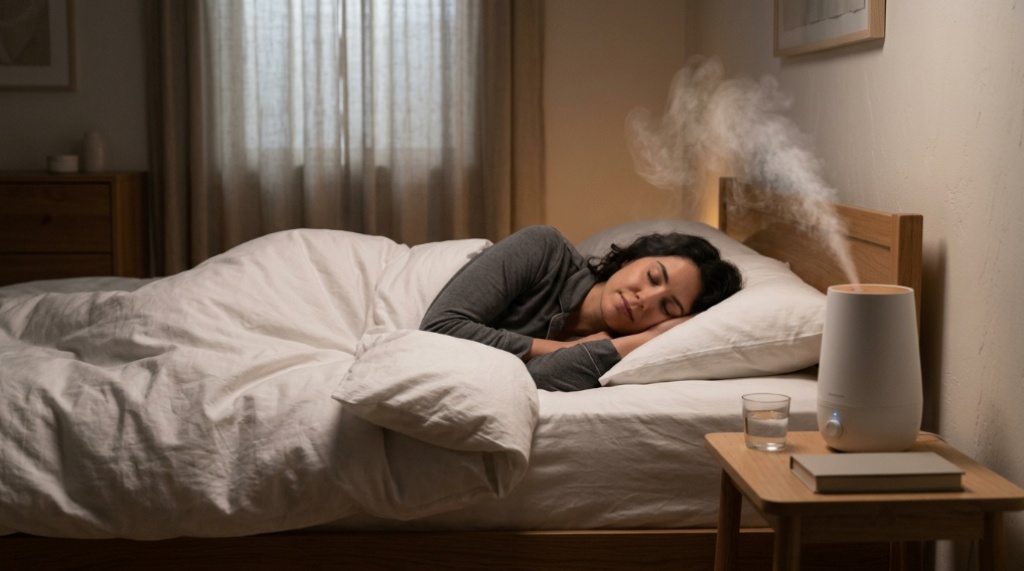
You set the thermostat to a comfortable 68°F, climbed into bed, and still woke up at 3 a.m. drenched in sweat. The room felt cool enough, so what went wrong? More often than not, the culprit is humidity — the invisible variable that quietly sabotages sleep quality even when your AC is working harder than ever. High humidity traps heat against your skin, while air that is too dry dries out your airways and leaves you coughing at dawn. If you sleep hot, cooling solutions like Pillow Showcase can complement your room-level fixes, but first you need to understand what humidity is actually doing to your body at night
Quick Answer
Humidity affects sleep primarily through your body’s ability to regulate temperature and breathe comfortably. High humidity (above roughly 60%) prevents sweat from evaporating, so your core temperature stays elevated and you wake up hot, sticky, and restless. Low humidity (below about 30%) dries out your nasal passages, throat, and skin, which can trigger coughing, congestion, and discomfort. Most sleep experts consider 40–50% relative humidity the ideal range for sleep, paired with a room temperature of about 65–68°F.
Key Takeaways
- Relative humidity between 40% and 50% supports the body’s natural nighttime cooling process; above 60% or below 30% reliably disrupts sleep.
- High humidity suppresses sweat evaporation, keeping your core temperature elevated and fragmenting deep sleep stages.
- Low humidity dries out mucous membranes, worsening snoring, congestion, and morning sore throats.
- A hygrometer is the cheapest diagnostic tool you can buy; guessing your indoor humidity usually leads to fixing the wrong problem.
- Portable dehumidifiers, humidifiers, fans, and breathable bedding work together; no single fix handles every humidity scenario.
Why Humidity Disrupts Sleep More Than You Think
Your body does not simply cool down at night — it actively sheds heat to drop its core temperature by roughly one to two degrees Fahrenheit, which helps trigger and maintain sleep. Sweat is the primary mechanism. When sweat evaporates off your skin, it carries heat away with it. Humidity determines how efficiently that evaporation happens.
When the air is already saturated with moisture, evaporation slows or stalls. Your body keeps producing sweat, but the cooling effect never arrives. You end up damp, overheated, and physiologically stuck in a state that makes deep sleep difficult to sustain. This is why a 75°F room at 70% humidity can feel far more miserable than an 80°F room at 30% humidity. The thermometer alone tells you almost nothing about how your body will actually experience the night.
This effect is particularly pronounced for people who already run hot — those who wake up with night sweats, sleep with a partner who radiates heat, or live in apartments where air conditioning struggles in July. For those sleepers, humidity control is not a comfort upgrade; it is a prerequisite for rest.
How High Humidity Affects Your Sleep
High humidity is the more commonly discussed problem, and for good reason. In most climates, summer humidity is the dominant sleep disruptor. Here is what it actually does once you are in bed:
- Blocks evaporative cooling: Your sweat sits on your skin instead of evaporating, so your core temperature stays elevated.
- Increases perceived temperature: Humid air feels warmer than dry air at the same reading, which is why weather reports use a “heat index.”
- Promotes tossing and turning: Discomfort triggers position changes that pull you out of deep and REM sleep without fully waking you.
- Encourages mold and dust mites: Dust mites thrive above 50% humidity and are a common allergen that can cause nighttime congestion and coughing.
- Makes mattresses and pillows feel damp: Foam and down absorb ambient moisture, and a damp pillow feels significantly hotter against your face.
A Concrete Example
Imagine two identical bedrooms, both at 74°F. Bedroom A sits at 35% humidity. Bedroom B sits at 75% humidity. A sleeper in Bedroom A will likely fall asleep within a normal window and wake up reasonably refreshed. A sleeper in Bedroom B will sweat without cooling, wake multiple times, and report feeling unrested even after eight hours in bed. Same temperature, very different night.
How Low Humidity Affects Your Sleep
Dry air gets less attention, but it causes its own specific set of problems, especially in winter or in homes with forced-air heating.
When humidity drops below roughly 30%, the mucous membranes lining your nose and throat dry out. These membranes normally filter and humidify the air you breathe. When they dry out, you may experience:
- An irritated, scratchy throat in the morning
- Increased snoring, because dry tissue is more prone to vibration and swelling
- Nasal congestion that paradoxically gets worse, not better, in dry air
- Cracked lips, dry skin, and itchy eyes
- More frequent nosebleeds for people prone to them
Dry air also dries out your skin’s outer layer, which can make you feel cold and clammy even in a warm room, prompting you to pile on blankets. Then you overheat under the blankets and wake up sweating. It is a surprisingly common cycle in winter bedrooms.
Finding Your Ideal Humidity Range for Sleep
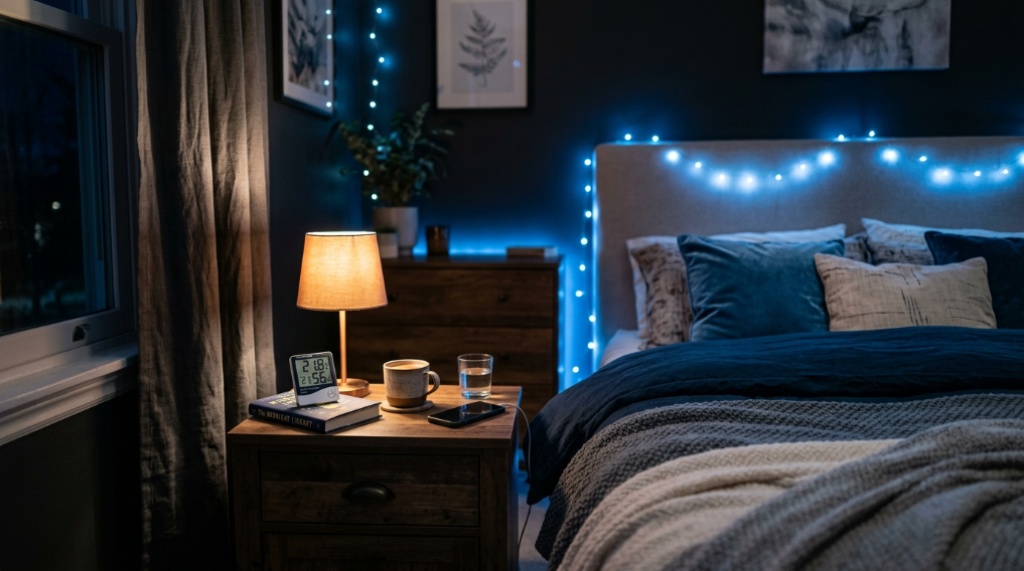
Target 40–50% relative humidity in your bedroom. This range supports efficient sweat evaporation, keeps your airways moist, and discourages dust mites and mold.
The catch is that “ideal” is not one number for everyone. Consider these individual factors:
| Factor | Lower Humidity (35–45%) | Higher Humidity (45–55%) |
|---|---|---|
| Sleepers who run hot | Generally more comfortable | May still feel sticky |
| People with asthma or allergies | Can dry out airways | Often easier to breathe |
| People prone to nosebleeds | May worsen symptoms | Better for mucous membranes |
| Dust-mite sensitive sleepers | Less mite activity | Mites thrive above 50% |
| Homes in cold climates | Reduces window condensation | Can cause condensation and mold |
If you have asthma, allergies, or a chronic dry-air problem, leaning toward the upper end of the range is usually better. If you sweat heavily and have no respiratory issues, the lower end may suit you. The only way to know your actual numbers is to measure.
Measure Before You Fix
Buy a hygrometer — a small device that reads relative humidity. Many cost as little as a good meal and sit on a nightstand. Check it at bedtime and again if you wake up in the middle of the night. If you live in a multi-room home, measure your bedroom specifically; kitchen and bathroom humidity can skew whole-home readings, if you are dealing with swelling while trying to rest, check out our guide on how to use a pillow for edema relief at home.
Practical Fixes for a Humid Bedroom
If your hygrometer consistently reads above 55–60%, you have a humidity problem. The fix depends on scale and cause.
- Identify the source. Is it climate-driven, a leak, poor ventilation, or something like an ensuite bathroom or indoor laundry? Fixing a leak or running an exhaust fan matters more than any gadget.
- Run a dehumidifier. A properly sized portable unit can pull a small bedroom down into the target range within an hour or two. Choose the capacity based on room size and how damp the space actually is.
- Use air conditioning wisely. AC removes moisture as a byproduct, but only while running. A unit set to “fan only” does nothing for humidity.
- Improve air circulation. A ceiling fan or standalone fan does not lower humidity, but it dramatically improves evaporation from your skin. Aim it at your body, not the ceiling, for best effect.
- Switch your bedding. Moisture-wicking sheets, breathable cotton or linen, and a pillow designed for hot sleepers can meaningfully improve how cool and dry you feel. For options tailored to hot sleepers, check the cooling pillow guide at Pillow Showcase.
- Address damp structural issues. Basements, crawlspaces, and unvented bathrooms can push humidity upward through the house. Seal, ventilate, or dehumidify at the source.
Practical Fixes for a Dry Bedroom
If your hygrometer reads below 30%, especially during winter or in heated apartments, you are dealing with the opposite problem.
- Run a humidifier. Cool-mist and warm-mist models both work; the choice is mostly preference and safety (warm-mist units can scald if knocked over).
- Keep the bedroom door open during the day. Trapped dry air in a sealed room gets drier overnight.
- Add moisture naturally. A bowl of water near a radiator, or drying laundry indoors in a well-ventilated area, can raise humidity modestly.
- Use a humidifier with a built-in humidistat. This lets you set a target of 45% and prevents over-humidification, which creates its own mold and dust-mite risks.
- Protect your airways. If you cannot fix humidity quickly, a saline nasal spray before bed can reduce dryness-related discomfort.
Watch the Overshoot
A common mistake is running a humidifier on high all night without measuring. Over-humidifying a bedroom above 55–60% recreates the same high-humidity sleep problems described earlier, and it can promote mold growth on windowsills and walls. Always aim for a target range, not “more moisture is better.”
What About Bedding and Pillows?
Your bedding interacts directly with the humidity in your room. A pillow that breathes helps your face stay cool even when the room is more humid than ideal. Memory foam tends to trap heat, while latex, down alternatives, and shredded fills generally sleep cooler. Moisture-wicking sheets — bamboo, linen, or performance synthetics — pull sweat away from your skin faster than dense cotton percale.
None of these replace humidity control. They are complements, not substitutes. But if you are already working on the room, upgrading the surface you sleep on amplifies the benefit.
When Humidity Is Not the Whole Story
If you have dialed in a 40–50% humidity range and you still wake up drenched, the problem may not be humidity at all. Consider these possibilities:
- Night sweats from medical causes: Hormonal changes, certain medications, infections, and other conditions can cause night sweats regardless of room environment.
- Bedding that traps heat: Heavy duvets and foam mattresses can overheat you even at ideal humidity.
- Mattress and pillow overheating: Some materials radiate your own body heat back at you.
- Sleep apnea or snoring: Often worsened by humidity but not caused by it.
- Too-warm room temperature: 68°F is a commonly cited target; some sleepers do better at 64–65°F.
Persistent, heavy night sweats without an obvious environmental cause are worth discussing with a doctor.
Frequently Asked Questions
What is the ideal humidity level for sleeping?
Most sleep guidance points to 40–50% relative humidity combined with a room temperature of around 65–68°F. Personal comfort varies, but readings below 30% or above 60% tend to cause noticeable sleep disruption for most people.
Does high humidity make you tired during the day?
Indirectly, yes. High humidity fragments sleep and reduces time spent in deep and REM stages, so you can wake up feeling unrested even after a full night in bed. Over time, that accumulated sleep debt shows up as daytime fatigue.
Can a fan alone fix humid air?
No. A fan does not remove moisture from the air, but it does speed up sweat evaporation and makes you feel cooler. It is a useful complement to a dehumidifier or AC, not a replacement.
Is it worse to sleep in a humid or dry room?
Both cause problems. High humidity prevents cooling and encourages mold and dust mites; low humidity dries out airways and worsens snoring and congestion. Most people find high humidity more immediately uncomfortable, while dry air causes slower, subtler irritation.
Should I run a dehumidifier while I sleep?
It is generally safe and often helpful, but choose a model rated for quiet operation. Placing a noisy unit in the bedroom can be as disruptive as the humidity itself. Some sleepers run it an hour before bed and turn it off overnight, as long as the room holds the target humidity.
Can humidity affect snoring?
Yes. Dry air can irritate and swell nasal passages, worsening snoring. Very humid air can also contribute to congestion for some sleepers. Keeping humidity in the 40–50% window usually reduces snoring triggered by environmental dryness or irritation.
Conclusion
Humidity is one of the most overlooked variables in sleep quality, and it can wreck your night from either direction. Get a hygrometer, measure your bedroom, and aim for 40–50% relative humidity paired with a cool room temperature. Address the source of the problem first — leaks, ventilation, climate — and rely on dehumidifiers, humidifiers, fans, and breathable bedding as targeted tools rather than guesses. Once your environment is dialed in, upgrading your pillow and sheets can push comfort further. Fix humidity first, and everything else about your sleep setup has a better chance of working.


