Swollen legs and feet can make even simple tasks feel difficult. Walking, standing, and sleeping become uncomfortable when fluid builds up in your body’s tissues. This condition is called edema, and it affects millions of people around the world.
The good news is that you do not always need expensive equipment or medical procedures to find relief. Sometimes, the solution is as simple as how you position yourself at home. Using a pillow the right way can reduce swelling, improve circulation, and help you feel much better by the end of the day.
This article explains what edema is, why elevation helps, and exactly how to use a pillow to get the most relief possible.
What Is Edema and Why Does It Happen
Edema is the medical term for swelling caused by excess fluid trapped in your body’s tissues. It most commonly affects the legs, ankles, and feet. However, it can also appear in the hands, arms, or face depending on the cause.
Several things can trigger edema. Sitting or standing for long periods is one of the most common causes. Pregnancy, certain medications, heart or kidney conditions, and a high-sodium diet can also lead to fluid buildup.
In many mild cases, edema is temporary. It improves with rest, movement, and proper positioning. Therefore, simple home remedies can be very effective for everyday swelling that is not caused by a serious medical condition.
If your swelling is severe, sudden, or accompanied by pain or shortness of breath, see a doctor right away. For mild, recurring swelling, read on.
Why Elevation Is One of the Best Natural Approaches
When your legs are lower than your heart for long periods, gravity pulls fluid downward into your feet and ankles. Raising your legs above heart level reverses that effect. It encourages the fluid to drain back toward the center of your body.
This is why doctors so often recommend elevation as one of the first fluid retention remedies. It requires no medication, no equipment, and no special training. All you need is a comfortable surface and the right support.
A pillow is the most accessible tool you have at home. Used correctly, it can elevate your legs at the ideal angle and hold that position comfortably for as long as needed.
Choosing the Right Pillow for Leg Elevation
Not every pillow works equally well for edema relief. A flat, soft pillow may compress under your weight and lose its height quickly. That means your legs end up lower than intended, and the elevation loses its effect.
Here is what to look for when selecting a pillow for this purpose.
Firmness matters most. A firmer pillow holds its shape and keeps your legs elevated at a consistent height. Memory foam and high-density foam options are popular choices because they offer both support and comfort.
Height is also important. Your legs should be raised approximately six to twelve inches above heart level for effective fluid drainage. That may require stacking two or more standard pillows, or using a purpose-built leg support cushion designed specifically for elevation.
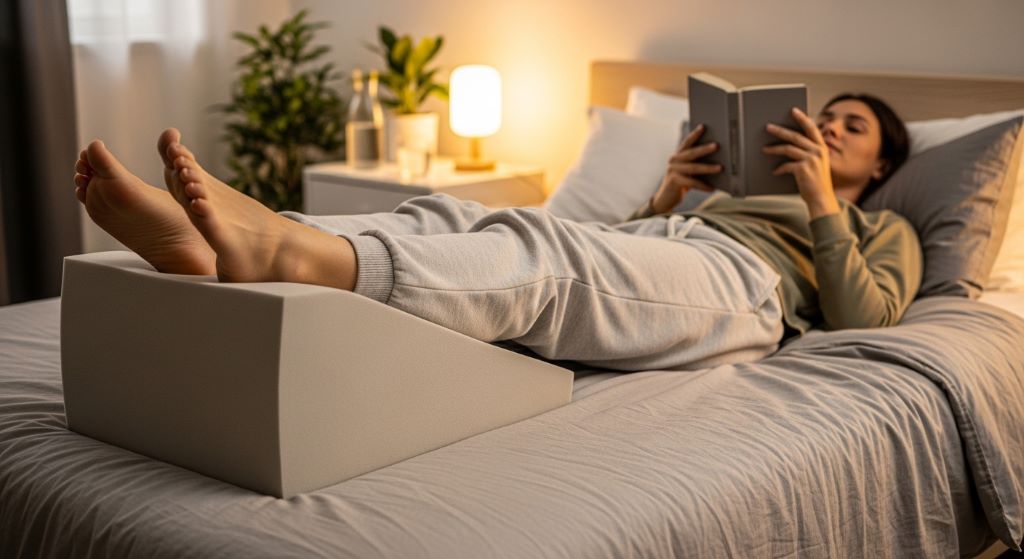
Shape plays a role too. Wedge-shaped pillows are especially useful because they provide a gradual slope. This supports the full length of your leg, from calf to heel, without putting pressure on any one point. That kind of even support reduces discomfort and makes it easier to stay elevated for longer.
Size matters as well. A pillow that only supports your ankles leaves your calves unsupported, which can create pressure points and actually reduce circulation. Look for something long enough to cradle both legs from the knee down.
How to Position Your Pillow Correctly
Getting the position right makes all the difference. Here is a step-by-step approach for the most effective results.
First, lie down on a flat surface such as your bed or a firm sofa. Make sure your back is straight and your spine is aligned. Lying in a twisted or awkward position can reduce blood flow rather than improve it.
Next, place your pillow or pillows under your legs. Position them so that your heels rest on the pillow, not hanging off the edge. Your calves, the backs of your knees, and your lower thighs should all be supported.
Adjust the height until your feet are clearly above the level of your hips. Ideally, they should be six inches higher than your heart. If one standard pillow is not enough, stack a second one underneath the first.
Make sure your knees are slightly bent. A fully straight leg can put tension on the back of the knee. A gentle bend is more comfortable and encourages better circulation.
Stay in this position for at least fifteen to twenty minutes. Longer sessions of thirty to forty-five minutes provide even better results. Many people find it helpful to do this once in the morning, once in the afternoon, and again before bed.
The Best Times of Day to Elevate Your Legs
Timing your elevation sessions can improve their effectiveness. Different points in the day bring different levels of fluid accumulation.
Morning elevation is useful if you wake up with stiff or slightly swollen legs. Even a short fifteen-minute session before you start your day can improve comfort and mobility.
Afternoon elevation matters most for people who sit or stand for work. By mid-afternoon, fluid has often been pooling in the lower legs for hours. A short break to lie down with your legs elevated can reset circulation and reduce fatigue.
Evening elevation is perhaps the most important session. After a full day of activity, your legs carry the most fluid buildup. Elevating them for thirty to forty-five minutes before bed helps drain that fluid, reduces overnight swelling, and can lead to better sleep.
Additionally, elevating your legs after exercise or a long walk can speed up recovery and reduce post-activity soreness.
Combining Pillow Elevation With Other Home Strategies
Pillow elevation works well on its own. However, it works even better when combined with other simple strategies. Together, these approaches form a complete set of fluid retention remedies that address swelling from multiple angles.
Hydration is one of the most overlooked factors. It may seem counterintuitive, but drinking enough water actually helps your body flush out excess fluid. When you are dehydrated, your body holds onto water as a protective response. Staying well-hydrated signals your body that it is safe to release stored fluid.
Reducing sodium intake is equally important. Salt causes your body to retain water. Cutting back on processed foods, canned soups, and salty snacks can make a noticeable difference in swelling levels within just a few days.
Light movement also helps. Gentle walking, ankle circles, and calf raises stimulate the muscles that pump blood and fluid back up the legs. Even short five-minute walks throughout the day can reduce fluid buildup compared to sitting still for hours.
Compression socks are another useful tool. They apply gentle pressure to the legs, which supports circulation and prevents fluid from pooling. Many people find it helpful to wear them during the day and then elevate their legs in the evening.
Cool water soaks can provide temporary relief as well. Soaking swollen feet in cool water for ten to fifteen minutes constricts blood vessels slightly and can reduce the feeling of puffiness. This works well as a quick fix before or after elevation sessions.

Using a Leg Support Cushion Versus Regular Pillows
Standard pillows can work well for elevation, but they do have limitations. They shift during use. They may not provide consistent height. And they often lack the ergonomic shape needed to support the full length of the leg.
A dedicated leg support cushion solves many of these problems. These products are designed with edema relief in mind. They maintain their height under body weight, provide a stable slope, and often feature a non-slip base to prevent sliding.
Many leg support cushions also have a contoured design that cradles the calf and knee. This reduces pressure points and makes it much easier to stay in the elevated position for longer periods.
That said, a quality leg support cushion costs more than a standard pillow. If you are just starting out or want to test whether elevation helps your particular type of swelling, regular firm pillows stacked together are a perfectly good place to begin. You can always invest in a purpose-built cushion later once you know it makes a difference for you.
Sleeping With Your Legs Elevated
For people with chronic edema, sleeping with elevated legs can be a game-changer. Lying in a flat position all night allows fluid to distribute itself evenly through the body, but it also means your legs have no gravity advantage working in their favor.
Keeping your legs slightly raised while you sleep helps your body continue draining fluid even during rest. A wedge pillow placed under the mattress cover or beneath the foot of the bed can achieve this without requiring you to sleep with a pillow under your legs all night.
However, sleeping with legs elevated is not comfortable for everyone. People with lower back problems may find it makes their back ache worse. In that case, a small pillow under the knees rather than the full leg can strike a better balance.
Start with a modest elevation of two to four inches if you are new to sleeping elevated. Give your body a few nights to adjust before increasing the height.
When to See a Doctor About Swelling
Pillow elevation and home remedies are effective for mild, occasional edema. However, they are not a substitute for medical care when swelling signals a more serious problem.
See a doctor if your swelling is sudden and unexplained. Also seek medical advice if the swelling is only in one leg, if it is accompanied by warmth or redness, or if you have pain in the calf. These symptoms can indicate a blood clot, which requires prompt treatment.
Additionally, swelling that does not improve with elevation, rest, and basic home care after several days should be evaluated. Persistent edema can sometimes point to issues with the heart, kidneys, or lymphatic system that need professional attention.
Use home remedies as a supportive tool, not a delay in getting the help you need.
Conclusion
Edema does not have to disrupt your daily life. Simple, consistent home care can make a significant difference in how your legs feel each day. Using a pillow to elevate your legs is one of the easiest and most effective strategies available.
Choose a firm, well-shaped pillow or a purpose-designed leg support cushion. Position your legs six to twelve inches above heart level. Keep your sessions consistent, aiming for at least two to three elevation periods each day. Combine elevation with good hydration, reduced sodium, light movement, and compression socks for the best overall results.
These fluid retention remedies are not complicated, but they work. With patience and a simple daily routine, most people with mild edema find meaningful relief at home — no prescription required.
Frequently Asked Questions
How long should I elevate my legs for edema relief?
Aim for fifteen to forty-five minutes per session. Doing this two to three times daily gives the best results. Longer and more frequent sessions are generally more effective for persistent swelling.
Can I use any pillow for leg elevation, or do I need a special one?
Any firm pillow can work in a pinch. However, a wedge-shaped leg support cushion or stacked firm pillows provide more consistent height and better support for the full length of the leg.
Is it safe to elevate my legs while sleeping every night?
For most people, yes. Start with a modest elevation and increase gradually. If you experience lower back discomfort, reduce the height or place the pillow under your knees rather than your calves.
How quickly will I see improvement after starting leg elevation?
Many people notice reduced swelling within one to two days of consistent elevation. However, results vary depending on the cause and severity of the edema. Chronic or severe cases may take longer to respond.
Are there any situations where leg elevation could make things worse?
Yes. People with certain conditions, such as peripheral artery disease or congestive heart failure, should consult a doctor before starting a regular elevation routine. In some conditions, raising the legs can put additional stress on the heart.
Related Topics:
How Much Does Mental Health Disability Pay Monthly
How to Get Better Sleep Without Pills (Safe Methods)